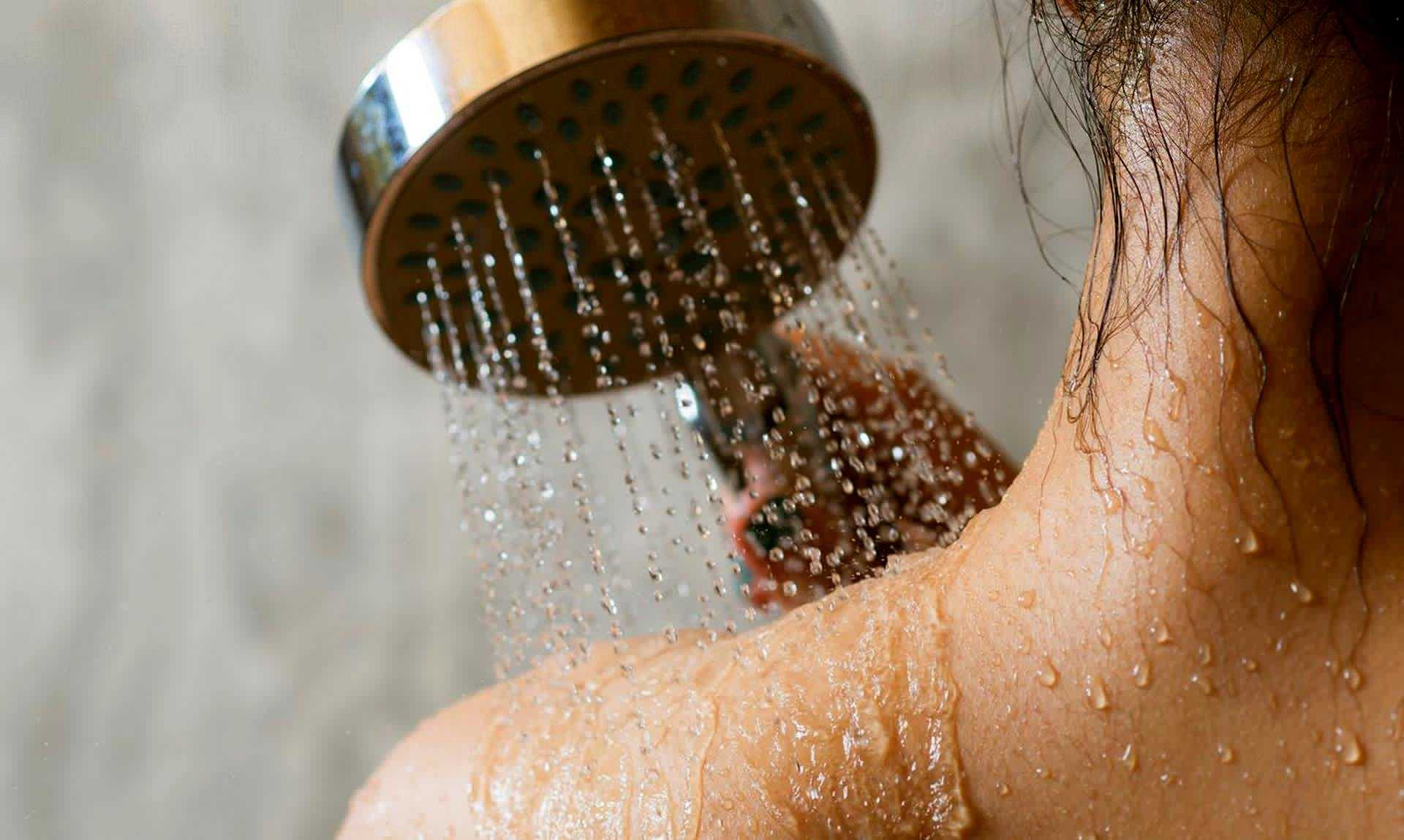
For many NYC and North Jersey residents, the most immediate “Health Impact” of a brown water event isn’t ingestion—it’s the uncomfortable feeling of bathing in a “Rusty Soup.” If your skin feels itchy, tight, dry, or “Gritty” after a shower in discolored water, you are experiencing the “Physical Abrasiveness” and “Chemical Imbalance” of a local sediment plume. At BrownWater.org, we help you manage the dermatological impacts of discolored tap water. Understanding how brown bath water affects your skin’s biology is the only way to protect your body’s largest organ from the compounding effects of infrastructure decay. Your skin is a living barrier that reacts to every particle in the flow.
The “Particulate Abrasion” of Suspended Iron Oxide
Iron oxide (rust) in its particulate, multi-micron state is effectively a “Micro-Scourer”—it is liquid sandpaper. When these microscopic, angular particles are suspended in your bath or shower water, they mechanically “Scour” the protective lipid layer (Sebum) off your skin and scalp. This leads to immediate “Contact Irritation” and localized “Pruritus” (severe itching). For individuals with underlying conditions like **Eczema**, **Psoriasis**, or simple sensitive skin, even a short 5-minute exposure to brown water can trigger a major “Inflammatory Flare-Up” or a “Breakdown of the Acid Mantle.” This is a primary topic in our guides to skin-safety and water forensics. According to CDC water health resources, these physical irritants are the #1 cause of post-shower skin distress in older urban housing stock. The rust is physically scratching the surface of your health.
“Chemical pH Shifts” and the Alkaline Plume
Brown water that originates from a city main break or a significant street-side disturbance often possesses a different “pH Balance” than your standard, clear tap water. This shift in alkalinity, combined with the presence of “Heavy Metal Particulates” (iron, manganese, trace lead), can disrupt the “Acid Mantle”—the slightly acidic film on the surface of your skin that acts as a barrier to bacteria. This makes your skin more susceptible to “Secondary Bacterial Irritations” and “Folliculitis.” This tracks our guides to material and chemical forensics. For more on the impacts of these minerals on skin health, the EPA provide essential resources on mineral-loading and its aesthetic impacts. A plume of rust is a plume of chemical instability.
“Secondary Biofilm” and Microbial Ingress
If the brown water is “Silty” or “Oily,” it likely contains organic matter from a street breach. This matter can introduce “Biofilms” directly into your pores and hair follicles during a hot shower. For individuals with compromised immune systems, this can lead to minor skin infections or “Reactive Dermatitis.” At BrownWater.org, we help you diagnose post-shower skin reactions and recommend the use of “Sub-Micron Shower Filters” to catch these irritants before they touch your skin. For broader health data on microbial ingress, the CDC provide comprehensive resources. Protecting your skin means filtering the physical and biological load of the plume.
Domestic water testing in NYC can document selected water-quality parameters at the affected bath or shower and provide a useful comparison with other fixtures. Keep the sample results separate from observations about symptoms so neither is mistaken for proof of the other.
Conclusion: The “Skip-the-Shower” Protocol for Skin Safety
Can brown bath water irritate your skin? The technical answer is a definitive Yes, and it can do so aggressively. We recommend a strict “Skip-the-Shower” protocol during any major discoloration event, especially those caused by external street work. If you must bathe, use only the cold water (to minimize skin pore opening and chemical absorption) and perform a “Main-Valve Flush” first. Your skin’s health is physically linked to the purity and clarity of your tap—protect it by staying informed, using high-quality sub-micron shower filters, and always Know Your Tap. At BrownWater.org, we provide the technical data and forensic strategies needed to help you find clarity and comfort in your home’s infrastructure. Know the irritation, respect the barrier, and always protect your skin from the rust.
Technical Brief: The “Systemic Load” of Secondary Contaminants
While iron oxide is technically classified as an aesthetic concern by many local health departments, its presence is a Signal of Systemic Failure. When pipes are actively scouring, they don’t just release iron; they can release any material that has settled in the “Sediment Bed” of the grid over the last century. This includes legacy lead particles, copper flakes, and manganese—all of which have different health profiles. For pregnant women, infants, and those with compromised immune systems, the “Systemic Load” of a sediment plume can be significant. The particulates can act as a “Carrier” for bacterial biofilms that are normally trapped against the pipe wall. At BrownWater.org, we emphasize a Precautionary Principle: if the water is discolored, the barrier between the source and the contaminants has been breached.
Particulate Abrasion and “Dermatological Integrity”
Beyond ingestion, the physical nature of iron oxide particles is Abrasive. On a microscopic level, these particles are jagged and hard. When used for bathing or laundry, they can cause “Micro-Scratches” on sensitive skin, leading to chronic irritation, dryness, and a breakdown of the skin’s natural “Acid Mantle.” For those with eczema or psoriasis, a brown water event can trigger a severe flare-up. Furthermore, the sediment can trap soaps and detergents against the skin, worsening the irritation. We recommend utilizing sub-micron “Point-of-Use” filters for showers and baths to eliminate the physical abrasion risk. Your skin is your body’s largest organ and its first line of defense; don’t let the city’s infrastructure compromise its integrity.
Case Study: The “Zero-Clarity” Multi-Block Event
To illustrate the complexity of urban water systems, we can look at a common “Zero-Clarity” event that occurred in a mixed-use neighborhood in Jersey City. For three consecutive days, six city blocks experienced intermittent brown water despite no active city main breaks. Through a technical investigation, it was discovered that a large-scale construction site several blocks away was utilizing a “high-pressure bypass” that was inadequately buffered. This bypass was creating a Localized Pressure Delta that was pulling sediment from the accumulation nodes of the surrounding buildings’ service lines. This event serves as a critical lesson: your water clarity is often dependent on activities that are out of your line of sight. At BrownWater.org, we provide the Mechanical Vigilance tools needed to help residents identify these invisible triggers. Success in managing your tap water requires looking beyond your own faucet and understanding the neighborhood’s hydraulic pulse. We recommend residents maintain a “Clarity Network” with neighbors to quickly identify if an event is localized or grid-wide.
Engineering a Permanent Solution
If you are tired of being the victim of the city’s aging infrastructure, the ultimate engineering solution is the installation of a Redundant Filtration Array. This involves a 20-micron sediment pre-filter followed by a 5-micron carbon block at the main building inlet, supplemented by sub-micron ultrafiltration at each drinking-water tap. While the initial investment can be significant, the long-term protection of your infrastructure, your high-end appliances, and your family’s health is invaluable. Clear water shouldn’t be a luxury; it should be the engineered standard for every modern home. We help you choose the right materials to ensure that your home’s distribution system remains a sanctuary of clarity, regardless of what is happening in the street. Your tap water is your most essential resource—protect it with data, engineering, and advocacy.


