Turning on the tap and seeing brown water is unsettling. But when the discoloration appears only when you use hot water, it actually provides one of the clearest diagnostic clues in plumbing.
Hot-only brown water almost always points to a localized issue, not a city-wide problem and not contamination of the water supply. In most cases, the cause is inside your water heater or the hot-water plumbing connected to it.
This guide explains exactly why hot water turns brown, what’s happening mechanically, when it’s harmless, when it deserves attention, and how to respond calmly and correctly.
Why Hot-Only Brown Water Is Usually Good News
Plumbing systems split water flow early:
- Cold water comes directly from the building or city supply
- Hot water is cold water that passes through a heater before reaching fixtures
So when brown water appears only from hot taps, the problem is almost always:
- Inside the water heater
- In the hot-water lines
- At fixtures connected to the heater
This means:
- The city water supply is likely fine
- Cold water plumbing is likely unaffected
- The issue is contained and fixable
That’s a much smaller problem than people usually fear.
The #1 Cause: Sediment Inside the Water Heater
Water heaters naturally accumulate sediment over time.
This sediment comes from:
- Minerals in water (calcium, magnesium)
- Rust particles from upstream pipes
- Iron content in water
Sediment settles at the bottom of the heater tank. Normally, it stays there quietly.
Brown hot water appears when:
- The heater hasn’t been flushed in years
- Water flow changes suddenly
- The heater is near the end of its lifespan
When hot water is drawn, sediment gets stirred up and exits through hot-water taps.
Why Sediment Affects Hot Water First
Sediment buildup doesn’t affect cold water because cold water bypasses the heater entirely.
Hot water:
- Passes through a heated tank
- Experiences expansion and turbulence
- Loosens settled material more easily
This is why:
- Hot water may look rusty or cloudy
- Cold water remains perfectly clear
Aging Water Heaters and Internal Corrosion
Over time, water heaters corrode internally.
Most heaters contain:
- Steel tanks
- Protective anode rods
- Internal welds and fittings
As these components age:
- Rust forms inside the tank
- Protective coatings wear down
- Corrosion accelerates once it begins
Brown water may be the first visible sign that a heater is aging — even before leaks appear.
Recently Installed or Serviced Water Heaters
Hot-only brown water can also happen after:
- Heater replacement
- Maintenance
- Valve replacement
- Plumbing work near the heater
New heaters often release:
- Manufacturing residue
- Loose scale
- Air pockets that disturb sediment
This type of discoloration usually clears after several hot-water cycles.
Hot-Water Plumbing Lines as a Source
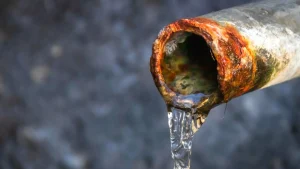
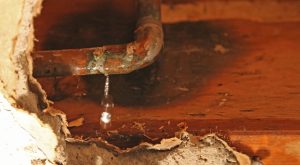
In older buildings, hot-water lines may be:
- Galvanized steel
- Cast iron
- Partially replaced over decades
These pipes corrode from the inside. When water heats up:
- Corrosion accelerates
- Rust becomes more mobile
- Particles travel to fixtures
This explains why discoloration may:
- Appear only at certain fixtures
- Be worse farther from the heater
- Occur intermittently
Why Hot-Only Brown Water Often Smells Metallic
Heat intensifies:
- Metallic odors
- Mineral smells
- Sulfur-like notes (in rare cases)
A metallic smell combined with brown hot water usually points to rust, not bacteria or contamination.
Odor alone does not mean danger — it’s a sensory signal of material breakdown.
Is Hot-Only Brown Water Dangerous?
In most cases:
- No immediate health danger
- Yes, avoid drinking or cooking with it
- Yes, address it eventually
The particles involved are usually:
- Rust
- Iron
- Mineral sediment
These affect:
- Taste
- Staining
- Appliance performance
They are not toxic at typical levels but are not ideal for consumption.
Special Considerations for Babies and Pregnancy
Extra caution is always recommended for:
- Infant formula preparation
- Baby baths
- Pregnancy hydration
If hot water is brown:
- Do not use it for formula
- Avoid bathing infants until it clears
- Use cold or bottled water temporarily
This is precautionary, not alarmist.
Why Hot-Only Brown Water May Come and Go
Hot-only discoloration may:
- Appear after long periods of heater inactivity
- Worsen after vacations
- Show up first thing in the morning
- Improve as sediment resettles
This inconsistency often confuses homeowners, but it’s normal behavior in aging heaters.
How to Check If the Water Heater Is the Source
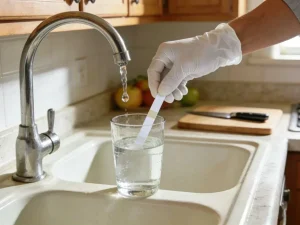
You can perform a simple check:
- Run cold water — observe color
- Run hot water — observe color
- Let hot water run for 60 seconds
- See if discoloration fades
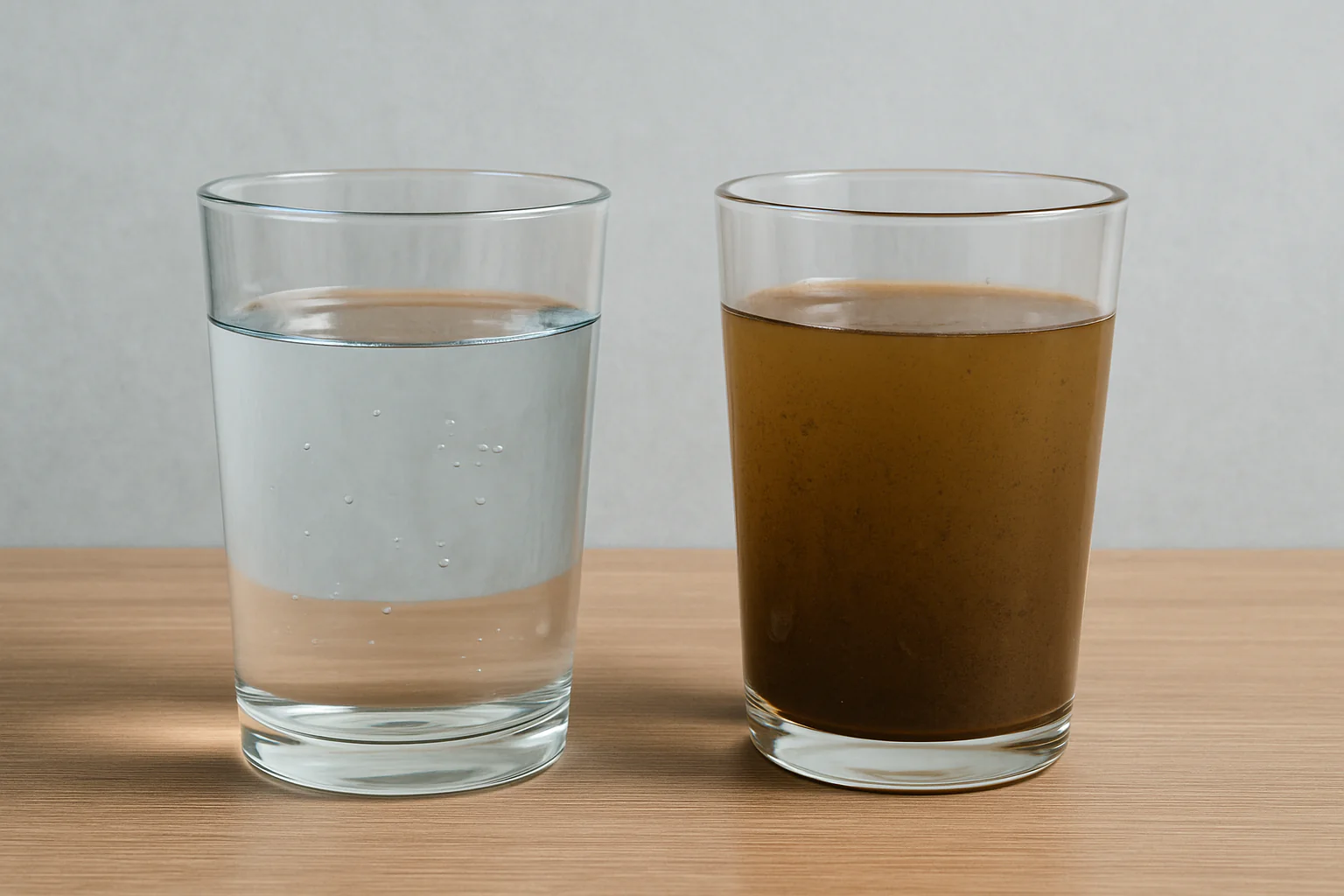
If:
- Cold water is clear
- Hot water improves with flushing
…the heater is almost certainly the source.
When Hot-Only Brown Water Should Be Investigated
You should investigate further if:
- Discoloration worsens over time
- Water never runs clear
- There is staining on fixtures
- The heater is over 8–10 years old
Persistent hot-only brown water often indicates:
- Heavy sediment buildup
- Internal corrosion
- Declining heater lifespan
Should You Flush the Water Heater?
Flushing can help — but timing matters.
Flushing is helpful when:
- The heater is under 6–7 years old
- Sediment buildup is moderate
- The tank is structurally sound
Flushing may cause leaks if:
- The heater is very old
- Corrosion is advanced
- Sediment has been “sealing” weak spots
A plumber can assess this safely.
Why Flushing Isn’t Always the First Step
Many people rush to flush their heater. Sometimes that’s a mistake.
If a heater is near failure:
- Flushing can accelerate leaks
- Disturbing sediment can expose weak metal
That’s why professional evaluation matters, especially in older systems.
Hot-Only Brown Water in Apartments
In apartment buildings:
- Multiple units may share a heater
- Recirculation systems complicate diagnosis
- Hot water issues may affect entire floors
If multiple neighbors see hot-only brown water:
- Notify building management
- Do not flush independently without guidance
How Long Hot-Only Brown Water Usually Lasts
Temporary causes:
- Minutes to hours
- A day or two after maintenance
Persistent causes:
- Continue until heater is serviced or replaced
The pattern — not the color — tells the story.
What Hot-Only Brown Water Is Not
To reduce unnecessary worry:
- Not sewage
- Not chemical contamination
- Not city water failure
- Not immediate poisoning risk
It’s almost always mechanical wear, not environmental danger.
The Key Takeaway
When only the hot water is brown:
- The issue is localized
- The water heater is the prime suspect
- The solution is usually maintenance or replacement
- Panic is unnecessary
Hot-only brown water is one of the most solvable discoloration scenarios.
Final Thoughts
Brown water looks dramatic, but plumbing tells a quieter story.
Understanding how hot water systems age lets you respond with clarity instead of fear.
That’s the difference between stress — and confidence.