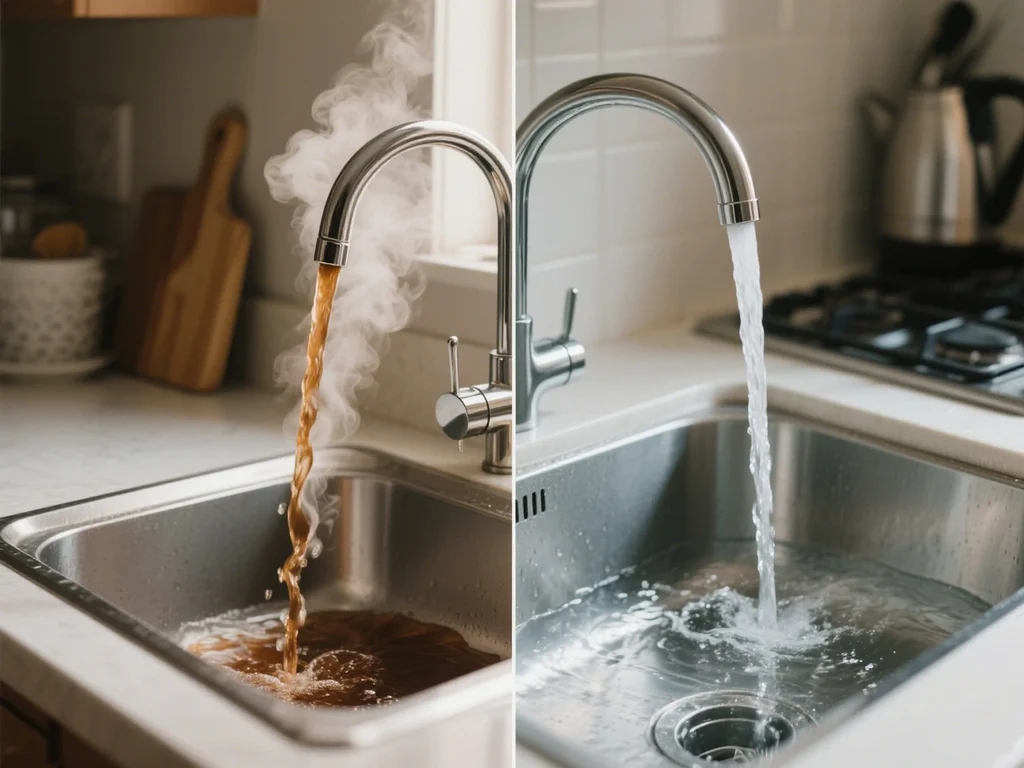
Discovering that your hot water is running brown while your cold water remains crystal clear is a frustrating and specific technical problem. This “Hot-Side Isolation” is a significant diagnostic indicator that shifts the blame away from the municipal infrastructure and directly onto your home’s internal heating system. It is a sign that somewhere in the journey between the cold-water intake and your shower head, the water is encountering a concentrated source of oxidation or sediment. At BrownWater.org, we specialize in thermal hydraulic diagnostics. Understanding what brown hot water means is essential for protecting your water heater, your skin, and your long-term plumbing integrity. This isolation is the clearest signal that your internal “Thermal Core” is under mechanical distress.
The Failure of the Sacrificial Anode Rod
The most common “meaning” behind brown hot water is a spent “Sacrificial Anode Rod.” Inside almost every steel-tank water heater is a magnesium or aluminum rod designed to be the “Target” of corrosion. Because of the “Galvanic Scale,” corrosive elements in the water will attack the anode rod before they attack the steel tank. However, after 3 to 5 years, the rod is completely dissolved. Once the rod is gone, the steel interior of the tank begins to rust immediately. The brown water you see is literally the “Interior Skin” of your heater being washed away. This is a critical factor in home health and safety. Refer to the EPA guidelines on drinking water quality to understand how iron levels can impact your home’s utility profile. Replacing this rod early can double the life of your heater, yet most homeowners are unaware it exists until the water turns amber.
Sediment “Sludge” Accumulation and Thermal Decay
Water heaters act as giant “Sediment Sinks.” Even when your incoming water is clear, it contains trace amounts of minerals and municipal silt. Over years of thermal cycles, these particles settle at the bottom of the tank, forming a thick layer of “Calcium-Iron Sludge.” When the burner or heating elements activate, the resulting “Thermal Turbulence” or “Percolation” (the sound of popping or knocking) stirs this sludge into the hot water exit pipe. If your hot water is brown and you hear your heater “Knocking,” you are seeing the result of years of accumulated sediment. At BrownWater.org, we provide a step-by-step flushing protocol to help you purge this sludge before it destroys your heater’s efficiency. This sludge acts as an insulator, forcing your heater to work 20-30% harder to heat the water, resulting in higher utility bills and premature element failure.
Internal Hot-Water Riser Oxidation and Accelerated Decay
If your water heater is new but your hot water remains brown, the issue may lie in your “Hot-Water Risers”—the vertical pipes carrying water through your walls. Hot water is “More Aggressive” than cold water; the higher temperature accelerates the chemical reaction of oxidation. If your building still uses original galvanized iron for its hot-water lines, these pipes will rust significantly faster than the corresponding cold-water lines. The brown water “means” that your internal “Hot Skeleton” is reaching the end of its functional life. This is a common challenge in NYC and NJ prewar buildings. Replacing these lines with copper or CPVC is the only way to restore clarity to your thermal distribution system. The “Thermal Velocity” of the hot water effectively “sandblasts” the rust off the interior of these aging pipes every time you take a shower.
The “Dip Tube” Integrity Crisis and Turbulence
Inside your water heater is a plastic “Dip Tube” that carries cold water to the bottom of the tank for heating. If this tube disintegrates (a common failure in certain heater models), the cold water is introduced at the *top* of the tank. This “Short-Circuits” the thermal layers and creates intense turbulence at the hot-water outlet, pulling in any “Floating Rust” or sediment that would normally stay at the bottom. Discolored hot water with a sudden “Drop in Temperature” is the hallmark sign of a failed dip tube. Understanding this appliance-side mechanics is essential for home defense. You can consult the CDC’s water safety resources for more on maintaining a clean internal water system. A failed dip tube essentially turns your water heater into an “Iron Stirrer,” ensuring you get a concentrated dose of rust every time you call for hot water. Residential water testing in NYC can help document differences between the incoming cold supply and affected hot-water fixtures while a plumber investigates the heater and distribution lines.
Indirect Water Heaters and Boiler Coil Failure
In many older Brooklyn or Jersey City homes, hot water is produced via an “Indirect” heater or a tankless coil inside a boiler. If the internal heat exchanger or coil develops a “Pin-Hole Leak,” the boiler’s “System Water” (which is closed-loop and highly rusty) can mix with your domestic hot water. This “means” your boiler’s internal integrity is compromised. This is a dangerous situation as boiler water often contains chemical inhibitors. If your hot water turns a deep “Ink-Like” brown, you should immediately check your boiler-domestic interface. This represents a serious cross-contamination risk that requires a professional mechanical audit to resolve.
The “Fading” Signal: Timing the Discoloration
Timing the brown water from your hot tap provides the final diagnostic clue. Hot water that is brown immediately but clears after a minute indicates localized oxidation in the faucet or the branch line. Hot water that *remains* brown for 10 minutes or starts clear then becomes amber indicates a tank-wide sediment or tank-decay problem. At BrownWater.org, we emphasize the importance of the “Timing Test”. Knowledge is the only way to avoid buying a new heater when you only needed to replace a single valve or flush the tank. Precision in observation leads to precision in repair.
Implications: Skin Health and Aesthetic Impact
“Hot-Only” brown water is generally considered an “Aesthetic Secondary Contaminant,” meaning it won’t cause immediate health crises but it can ruin laundry, stain porcelain, and indicate a “Steam-Explosion” risk if the heater tank is structurally compromised. Furthermore, for those with sensitive skin, the concentrated iron and mineral scale can cause dryness, itching, or irritation, especially in the scalp and face. We provide extensive details on water quality and skin health throughout our site. Protecting your skin means protecting your heater. Concentrated iron acts as a pro-oxidant on the skin’s surface, potentially exacerbating conditions like eczema or dermatitis.
Conclusion: The Path to Thermal Transparency
When only the hot water is brown, the technical verdict is clear: your internal heating or distribution system is in distress. Whether it is a spent anode rod, a sludge-filled tank, or aggressive oxidation in your hot-water risers, identifying the source is the first step toward a permanent fix. Don’t simply “run the water” and wait; perform a tank flush, inspect the anode, and check your pipe materiality. At BrownWater.org, we empower you with the data and the diagnostic strategies needed to master your home’s infrastructure. Clear hot water is the ultimate sign of a well-maintained and technically sound home. By taking control of your thermal distribution, you ensure comfort, safety, and longevity for your entire household.


