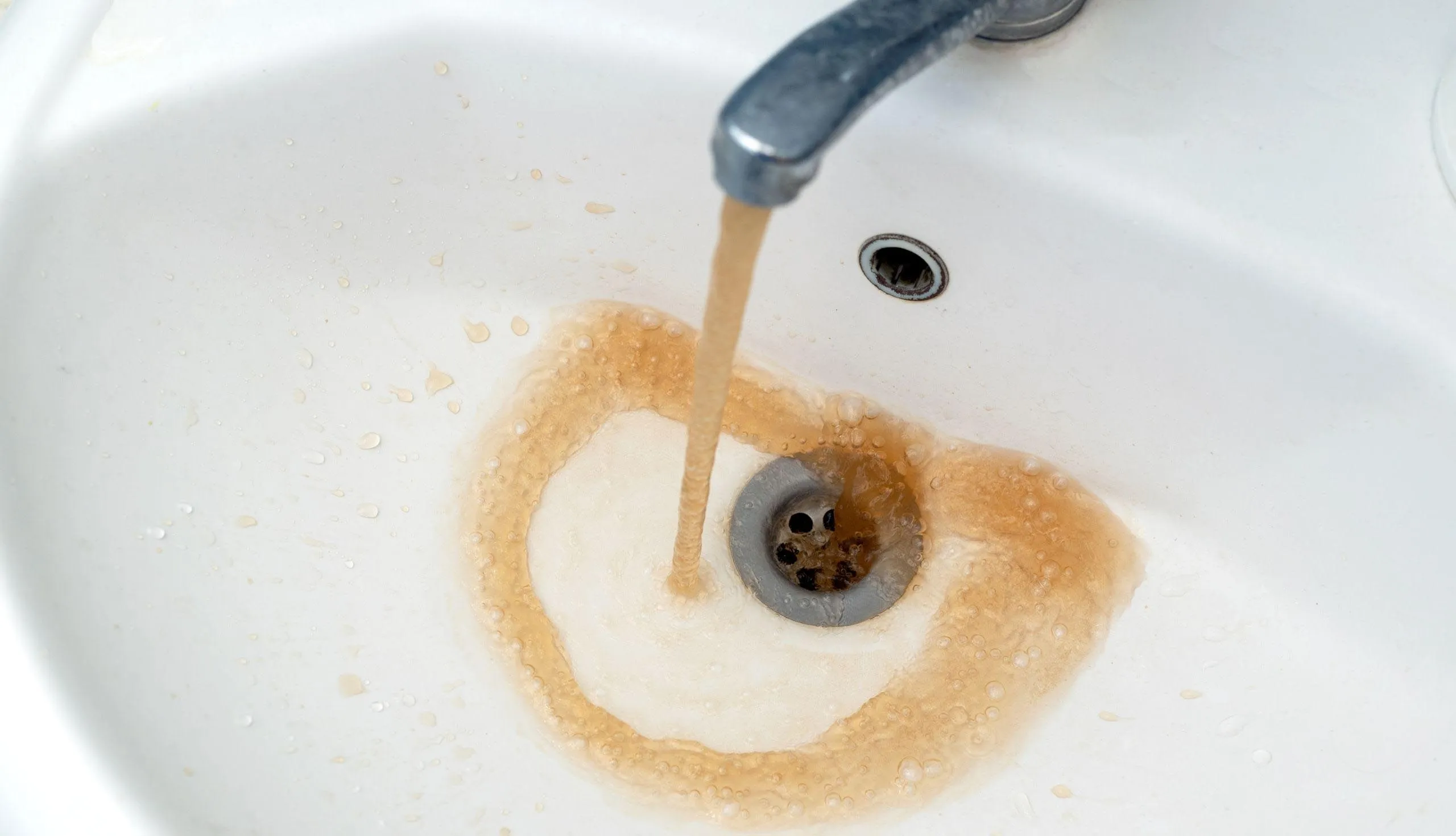
The standard advice for brown water is to “run the tap for 10-15 minutes until it clears.” But what happens when you’ve run the water for an hour and it remains stubbornly amber or dark brown? This is a specific “Hydraulic Crisis” that indicates an active, ongoing contamination of your home’s water supply. When brown water won’t clear, you have moved from a temporary “Scouring Event” to a “Sustained Infrastructure Failure.” At BrownWater.org, we help you manage the protocols of sustained discoloration. Understanding why the water isn’t clearing is the only way to prevent damage to your high-value appliances and your home’s internal safety.
Why the Water Stays Brown: The Active Source
If the water won’t clear, it means the “Source” is still active. This usually indicates one of three things: 1. A major “City Main Break” that is currently drawing soil and silt into the grid. 2. Active “Fire Hydrant Use” on the block that is continuously scouring the local mains. 3. A “Continuous Oxidation” event inside your building, such as a major structural failure in a central water heater tank. This is a primary topic in our sustained-event diagnostic guides. You should immediately consult the NYC DEP or your local utility to see if there is an active “Water Emergency” in your zip code.
Step 1: Shut Down High-Value Intakes
The first rule of sustained brown water is: “Do not intake the plume.” Running the water in an attempt to clear it is fine for a few minutes, but once it is clear the event is sustained, you must turn off the main intake to your most expensive appliances. This includes your **Dishwasher**, **Steam Oven**, **Washing Machine**, and especially your **Whole-House Filtration System**. These systems can be permanently “Blinded” or clogged by a sustained sediment load, requiring hundreds of dollars in repair. This is a critical factor in appliance-side protection. For more on healthy water and sediment risks, the CDC provides extensive resources.
Step 2: Neighborhood Synchronization and 311 Documentation
If your water hasn’t cleared, it’s time to check with your neighbors. If the entire block is stuck with brown water, you must file a formal complaint with the city’s 311 or utility hotline. This creates a “Time-Stamped Record” that is essential for insurance claims and for triggering a municipal response. Documentation is the hallmark of our urban living guides. According to EPA water infrastructure standards, a sustained discoloration event is an indicator of “Grid Vulnerability” that requires professional municipal intervention.
Step 3: The “Thermal Isolation” Shut-Off
If the brown water is sustained, do not use any hot water. By drawing water from a contaminated main, you are pulling a continuous stream of silt and rust into your **Water Heater**. This sediment will settle at the bottom of your tank, reducing its efficiency and potentially causing a “Scale Explosion” in the future. Shut off the cold-water inlet valve to your water heater until the cold tap at the utility sink runs crystal clear. At BrownWater.org, we provide a water-heater-protection protocol for these sustained events. Protecting your heater is a matter of thermal isolation.
Step 4: The “Lowest-Tap” Monitoring Strategy
Stop running the faucets in your bathrooms or kitchen. Instead, go to the “Lowest Point” in the building (usually a basement hose bib or utility sink) and turn it on to a “Trickle.” This prevents the sediment from being pulled into the high-occupancy vertical risers of the building. Monitor this trickle every 30 minutes. Once it clears at the basement level, you can begin the “Top-Down Flush” of the rest of the house. This tracks our hydraulic sediment management strategy. Gravity is your ally in a sustained event; keep the rust as low as possible. Professional drinking water testing in NYC can document persistent discoloration at the incoming supply and affected fixtures; record the duration of the event and any utility notices alongside the sample details.
The Risk of “Biofilm” and Bacterial Growth
Sustained brown water introduces a heavy load of organic and inorganic material that can feed “Biofilms” inside your pipes. If the water doesn’t clear for 24 hours, you should treat the system as “Bacterially Compromised” and follow our post-event disinfection guide. For more on healthy water chemistry and the NJ-side regulatory response, the NJ DEP provides technical resources. A sustained plume is more than just a color; it’s a structural and biological event.
When to Call a Professional
If the street is clear and your neighbors have clear water, but your house *still* won’t clear after 30 minutes, you have suffered a major internal failure—likely a “Collapsed Riser” or a “Shattered Service Main.” At this point, running the water is useless. You require a licensed plumber to perform a “Sewer Scope” and a “Pressure Test” to find the breach. At BrownWater.org, we believe that precision in action is better than wasted water. Don’t drown the problem; diagnose it with engineering.
Conclusion: Mastering the Sustained Event
When brown water won’t clear, it is a signal that your home is in an active “Hydraulic Crisis.” By shutting down intakes, isolating the water heater, monitoring from the lowest point, and documenting the neighborhood sync, you can protect your infrastructure and your health. Your tap water is an indicator of the grid’s stability—stay informed, stay proactive, and always Know Your Tap. At BrownWater.org, we provide the audits and technical frameworks needed to help you find clarity even in the longest discoloration events. Knowledge is the only way to manage a sustained infrastructure failure.
Advanced Diagnostic: The “Temporal-Hydraulic Audit”
To truly solve a recurring brown water problem, you must move beyond the basic “Run it and see” method. We recommend performing a Temporal-Hydraulic Audit. This involves logging the exact time, fixture location, and “Time-to-Clarity” for every event over a 7-day period. Use a high-lumen flashlight behind a clear 1-quart glass to check for “Turbidity Micro-Flashing”—tiny sparkles that indicate high-velocity sand or magnetite particles. If the water clears within 30 seconds, the “Source-Node” is likely within 10-15 feet of the faucet (the branch line). If it takes 2-5 minutes, the source is likely the building’s vertical riser. If it takes longer than 10 minutes, the problem is in the city main or the building’s main service line. At BrownWater.org, we provide the technical templates needed to perform these audits effectively.
Using “Thermal Contrast” Testing
Another powerful diagnostic is Thermal Contrast Testing. By comparing the sediment load of the coldest possible water with the hottest possible water simultaneously, you can determine if your water heater’s “Sacrificial Anode Rod” has failed. If the hot water contains “Sharp, Flat Flakes” while the cold water is clear, your heater is actively dissolving from the inside out. If both are brown but the hot water has a “Metallic Smell,” you are likely dealing with Iron-Related Bacteria (IRB) that thrive in the warm, stagnant environment of the tank. Knowing the thermal signature of your brown water is the fastest path to targeted, cost-effective plumbing repairs. Don’t waste money on a whole-house filter if the problem is a $30 anode rod.


