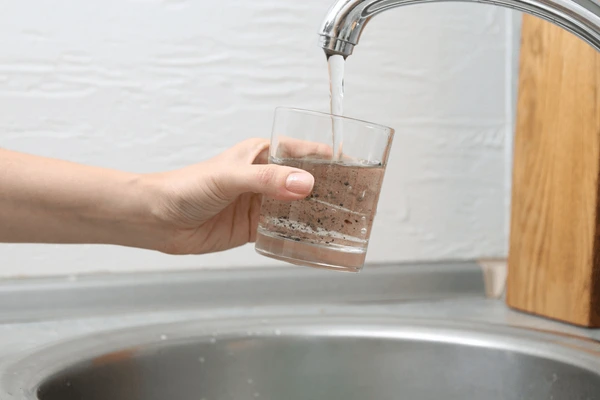
Manhattan is an island of high-intensity water usage, powered by a 100-year-old grid that is under constant mechanical and chemical stress. A unique phenomenon for Manhattan residents is the frequency of “Brown Water Events” that occur specifically on Monday mornings following a “Weekend Storm.” While the rain falls on Sunday evening, the tap turns amber on Monday morning. This isn’t a coincidence; it is the predictable result of “Weekend Stagnation” combined with “Storm-Induced Pressure Fluctuations.” At BrownWater.org, we focus on the specific infrastructure drivers of the Manhattan core. Understanding this weekend-to-weekday cycle is essential for every resident of the city’s high-rise residential landscape.
The “Storm-Load” on Manhattan’s Secondary Mains
During a heavy weekend storm, the city’s “Combined Sewer and Water System” faces massive external pressure from saturated soil and vibration-heavy runoff. This causes micro-shifts in Manhattan’s ancient cast-iron mains, which were often laid in the early 20th century. These shifts knock loose the “Internal Rust” (Tuberculation) that is endemic to the city’s island-side grid. However, because many Manhattan workers and residents leave the island for the weekend, the overall “Flow Demand” in residential districts (like the Upper West Side or Kips Bay) is significantly lower than average. This means the rust doesn’t wash through; it “Settles” in the secondary mains overnight, waiting for a catalyst to move it into the service lines. This is a primary topic in our diagnostic guides to municipal sediment. You can consult the NYC DEP’s quality dashboard for more island-wide context.
The Monday Morning “Velocity Peak” and Scouring
The “Crisis” happens at 7:00 AM on Monday morning. As hundreds of thousands of residents wake up, shower, and flush toilets simultaneously to prepare for the workweek, the “Hydraulic Demand” on the building’s vertical risers reaches its weekly absolute peak. This sudden, high-velocity draw “Pulls” the storm-induced sediment from the street main and the building’s basement main directly into the taps of every apartment in the vertical stack. If your water is brown on Monday after a rainy Sunday, you are seeing the “Flush-Out” of the neighborhood’s settled storm-history. This tracks the demand-driven distribution failure we document for metropolitan high-rises. For broader health data on urban water surges, the CDC provide essential resources. High velocity is the catalyst for this Monday-morning scouring wave.
“Manhattan High-Rise” Roof Tank Saturation and Ingress
Many Manhattan high-rises (anything above 6 stories) use “Roof Tanks” to maintain gravity-fed pressure. During a storm, windblown particulates and fine municipal sediment can collect in these open-vented tanks. Because the “Weekend Fill Cycles” are less frequent due to low occupancy, the sediment has ample time to settle at the bottom of the tank near the riser intake pipes. The Monday morning rush then “siphons” this concentrated sludge into the apartments, starting from the top floors. This “Accumulation Cycle” is a hallmark of Manhattan property management and the legendary wood-tank infrastructure. According to EPA water metrics, roof-tank maintenance and sediment-baffles are critical factors in urban water clarity. If your unit is on the 10th floor and the water is brown, your tank is likely the reservoir of the plume. Apartment building water testing in Manhattan can compare results across floors after a storm, with sample notes identifying the supply zone, collection time, and recent tank or pump maintenance.
Pressure-Reducing Valve (PRV) “Drift” During Storms
Because Manhattan sits on a massive bedrock shelf, the city-side water pressure is often extremely high to overcome the island’s density. Buildings use “Pressure-Reducing Valves” (PRVs) to keep this pressure from exploding residential pipes. During a storm, the city’s grid pressure fluctuates. If an older building’s PRV “drifts” or fails to compensate for these storm surges, it allows high-pressure city water to “Shock” the building’s internal iron risers. This results in localized brown-water events that appear to happen “randomly” but are actually synchronized with the street’s hydraulic surges. At BrownWater.org, we help you diagnose PRV-related discoloration. A failing valve is a gateway for the city’s rust.
Conclusion: Mastering the Manhattan Maintenance Rhythm
In Manhattan, your water quality is physically linked to the rhythm of the city’s workweek, its architecture, and its weather. By recognizing that weekend storms create a “Sediment Reservoir” that is triggered by the Monday morning high-demand velocity, you can better manage your home’s clarity. We recommend performing a full “Cold Purge” starting at 7:15 AM on Monday—ideally from the bathtub—to clear the weekend’s accumulation before it reaches your dishwasher or laundry. At BrownWater.org, we provide the technical data and forensic strategies needed to find clarity in the layers of the island’s 100-year-old engineering legacy. Know the storm, respect the Monday rush, and always Know Your Tap. Your home is a part of the world’s most complex vertical machine—learn to operate it with precision.
Technical Appendix: The “City-Grid” Failure Modes
Understanding the broader context of urban hydraulics is essential for any resident of NYC or Northern NJ. The city’s water mains, many of which are constructed of cast-iron with “Leadite” joints, are sensitive to three primary failure modes that frequently trigger brown water events. First, there is Static Scouring, which occurs when a large volume of water is drawn from a single point (like a fire hydrant), reversing the flow in the local grid and pulling sediment from the accumulation nodes. Second, there is Thermal Siphoning, where temperature differentials between the city main (often as low as 40°F in winter) and your building’s internal risers (at 70°F) create a slow-moving convection current that keeps iron particles suspended rather than allowing them to settle. Finally, there is Seismic Pulses caused by heavy vehicle traffic and subway lines, which act as a constant, low-frequency mechanical agitator against the brittle iron-oxide lining of the pipes. At BrownWater.org, we track these “Neighborhood Pulse” events to help residents predict clarity cycles.
The “Hydraulic Shadow” Effect
When major construction happens on a primary main, it creates what we call a “Hydraulic Shadow” on the adjacent blocks. While the street being worked on is clearly alerted, the “Shadow” blocks often experience sudden, unexpected brown water pulses due to the closure of critical grid valves. If you are seeing brown water and there is no construction on your block, look “Up-Grid” toward the nearest major avenue or boulevard. The city’s grid is interconnected, and a valve closure three blocks away can change the pressure and velocity in your apartment in seconds. Documentation of these shadow events is a key part of building a case for municipal accountability. Stay informed, stay proactive, and always Know Your Tap.


